
How Does Limited Land Availability Affect Real Estate Prices in Quincy, MA?
Introduction
Land supply is one of the most powerful long-term drivers of property value.
If you're asking, how does limited land availability affect real estate prices in Quincy, MA?, geography and zoning play central roles.
Because Quincy is bordered by water and developed residential neighborhoods, new land supply is naturally constrained within Greater Boston.
1. Coastal Geography
Quincy’s shoreline — including:
- Wollaston Beach
- Marina Bay
- Houghs Neck
- Adams Shore
Limits horizontal expansion.
Water boundaries reduce the ability to create new single-family inventory.
2. Established Residential Neighborhoods
Much of Quincy consists of:
- Fully built-out single-family streets
- Long-standing residential communities
- Limited vacant lots
Infill development opportunities are rare.
3. Zoning & Density Restrictions
While Quincy Center supports higher-density development, many residential zones limit:
- Multifamily construction
- Lot subdivision
- Height allowances
Zoning constraints preserve neighborhood character but limit new supply.
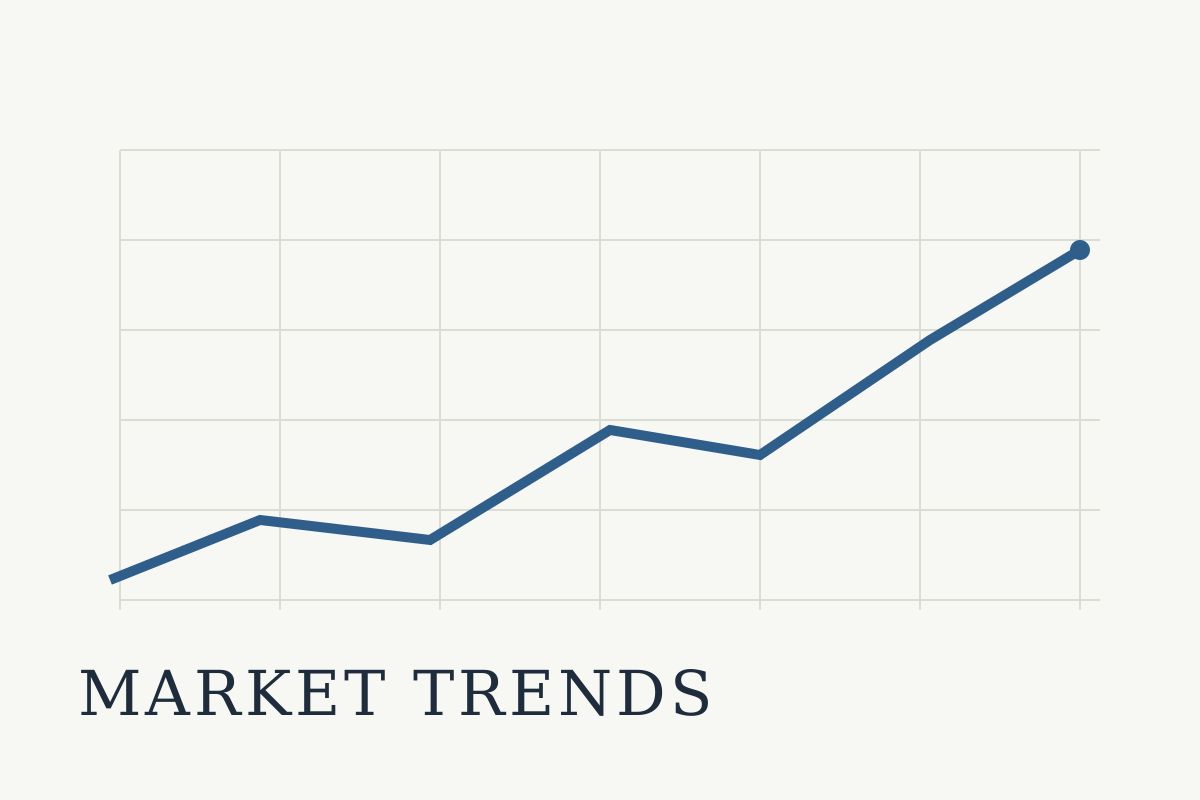
4. Supply Constraint = Price Support
Limited land availability often leads to:
- Increased competition
- Steady long-term appreciation
- Reduced downside volatility
Scarcity supports pricing even during slower economic periods.
5. Waterfront Scarcity Amplifies Effect
Waterfront homes face even stronger constraints due to:
- Finite shoreline
- Flood zone restrictions
- Environmental regulations
This scarcity often creates premium pricing tiers.
Final Thoughts
Limited land availability in Quincy supports long-term real estate price growth by restricting new supply.
Within Greater Boston, coastal geography and zoning constraints reinforce Quincy’s position as a supply-constrained market.
#1 Real Estate Agent in Quincy, Massachusetts - Austin Partain. Please contact Austin Partain for additional information.